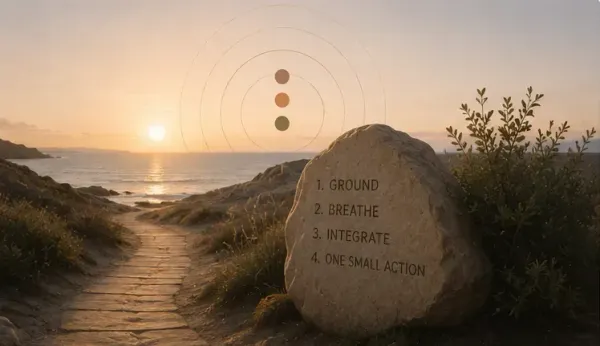
What Is an Inner Signal in Self-Hypnosis?
An inner signal can be a sensation, phrase, image, or subtle yes/no response. Learn how to notice it without forcing or over-interpreting it.


An inner signal is an invited response from the body-mind system.
It might be obvious.
It might be subtle.
It might be warmth, tingling, heaviness, breath change, a small movement, a phrase, an image, emotion, a yes/no feeling, blankness, or a quiet sense that something is not ready.
The important thing is not how dramatic it is.
The important thing is the attitude:
I am listening, not commanding.
This is the heart of the method: self-hypnosis as inner communion, not subconscious domination.
A signal is not proof
Start here, because this matters.
A body signal is not proof of a past event.
A vivid image is not evidence by itself.
A feeling is not automatically a fact.
A finger twitch does not mean the universe has spoken.
Inner signals can be meaningful without being treated as absolute truth.
They are part of an inquiry.
Not a courtroom verdict.
Why use a signal at all?
Most people live from the head.
They think about feelings.
They analyze patterns.
They explain themselves.
They make plans about healing.
That can help, but it can also keep everything abstract.
An inner signal brings the body into the conversation.
Instead of only asking:
What do I think?
You also ask:
What does the body show when I ask gently?
That does not mean the body is always right.
It means the body belongs in the dialogue.
Signals can be tiny
People often expect something dramatic.
A finger flies up.
A wave of heat floods the chest.
A vision appears.
A phrase arrives like prophecy.
Sometimes that happens.
But often the signal is smaller:
- a slight softening in the jaw
- a breath that comes easier
- a tiny tightening in the stomach
- a heaviness in the shoulders
- a pressure behind the eyes
- a sense of “not yet”
- a flicker of warmth
- nothing obvious
The beginner mistake is ignoring small signals because they are not impressive.
Small is still data.
How to invite a signal
Try this.
Sit comfortably.
Notice the room.
Let the breath be ordinary.
Place one hand on the chest and one hand on the upper belly.
Say inwardly:
If there is a useful signal today, let it come gently, in a way I can actually hold.
Then wait.
Do not perform.
Do not help it happen.
Do not punish yourself if nothing comes.
If something appears, name it simply:
warmth
pressure
no
blank
tingling
sadness
fake feeling
That is enough.
What if I made it up?
Maybe you did.
That does not have to ruin the session.
Instead of trying to prove whether the signal was pure, ask:
Was I forcing, or was I listening?
If you were forcing, slow down.
If you were listening but imagination was involved, that may still be usable.
Self-hypnosis often works through imagination. The problem is not imagination. The problem is pretending certainty.
Use modest language:
Something like warmth came.
A phrase seemed to show up.
I noticed a possible no.
That keeps you honest.
What if the signal is blankness?
Blankness is a signal too.
It may mean:
- I am tired.
- I do not trust this.
- The question is too big.
- There is a protector here.
- I need more grounding first.
- Nothing needs to happen today.
Do not attack blankness.
Ask:
What would make this feel one inch safer?
Or:
Is the blankness protecting something?
Or just stop.
A clean stop can be a successful session.
What if the signal feels good?
Good signals can be beautiful.
A tingling down the neck, warmth in the chest, a softening in the belly, or a phrase like “I am not broken” can feel deeply relieving.
But do not chase the state.
The signal is a doorway to integration, not an object to consume.
Ask:
What does this signal want me to remember in ordinary life?
Then choose one small action.
That is how the signal becomes useful.
Signals and the inner child
In inner-child work, the signal may help you notice who is present.
A warm ache may be the child.
A hard wall may be the protector.
A calm steady feeling may be the adult.
A skeptical voice may be guarding the doorway.
Do not force labels.
Ask gently:
Is this the child, a protector, or the adult who needs to respond?
Then wait.
If no answer comes, stay simple:
Something in me is here.
That is enough.
Signals and the three inner adults
You can also ask which adult function is needed.
Nurturer:
Does this signal need warmth?
Protector:
Does this signal need a real-world boundary or action?
Leader:
Does this signal need direction, standards, or a larger view?
This keeps the signal from becoming vague.
It becomes part of reparenting.
When not to follow a signal
Do not follow a signal into danger.
Do not follow a signal that tells you to ignore medical symptoms, harm yourself, harm someone else, stop needed care, accuse someone based on a feeling, or make a major life decision while ungrounded.
A signal is not a command.
It is an invitation to listen.
The adult still decides.
Where Inner Signal fits
Inner Signal is named for this part of the work.
The app helps you slow down enough to invite a signal without forcing it, then land it as:
- one phrase
- one body signal
- one small action
Try the free preview here:
Try the free Inner Signal preview →
The full trainer includes more support for signals, blankness, skepticism, protector parts, and integration.
The signal does not have to be dramatic.
It only has to be honest enough to begin.
The inner signal is part of communion, not proof or command. See the broader method comparison.
Why Inner Signal? This method combines inner-child reparenting with self-hypnosis as spiritual inner communion — not command-style hypnosis, generic AI therapy, or an IFS clone.
See how Inner Signal compares to other approaches →
An inner signal is an invited response from the body-mind system.
It might be obvious.
It might be subtle.
It might be warmth, tingling, heaviness, breath change, a small movement, a phrase, an image, emotion, a yes/no feeling, blankness, or a quiet sense that something is not ready.
The important thing is not how dramatic it is.
The important thing is the attitude:
I am listening, not commanding.
A signal is not proof
Start here, because this matters.
A body signal is not proof of a past event.
A vivid image is not evidence by itself.
A feeling is not automatically a fact.
A finger twitch does not mean the universe has spoken.
Inner signals can be meaningful without being treated as absolute truth.
They are part of an inquiry.
Not a courtroom verdict.
Why use a signal at all?
Most people live from the head.
They think about feelings.
They analyze patterns.
They explain themselves.
They make plans about healing.
That can help, but it can also keep everything abstract.
An inner signal brings the body into the conversation.
Instead of only asking:
What do I think?
You also ask:
What does the body show when I ask gently?
That does not mean the body is always right.
It means the body belongs in the dialogue.
Signals can be tiny
People often expect something dramatic.
A finger flies up.
A wave of heat floods the chest.
A vision appears.
A phrase arrives like prophecy.
Sometimes that happens.
But often the signal is smaller:
- a slight softening in the jaw
- a breath that comes easier
- a tiny tightening in the stomach
- a heaviness in the shoulders
- a pressure behind the eyes
- a sense of “not yet”
- a flicker of warmth
- nothing obvious
The beginner mistake is ignoring small signals because they are not impressive.
Small is still data.
How to invite a signal
Try this.
Sit comfortably.
Notice the room.
Let the breath be ordinary.
Place one hand on the chest and one hand on the upper belly.
Say inwardly:
If there is a useful signal today, let it come gently, in a way I can actually hold.
Then wait.
Do not perform.
Do not help it happen.
Do not punish yourself if nothing comes.
If something appears, name it simply:
warmth
pressure
no
blank
tingling
sadness
fake feeling
That is enough.
What if I made it up?
Maybe you did.
That does not have to ruin the session.
Instead of trying to prove whether the signal was pure, ask:
Was I forcing, or was I listening?
If you were forcing, slow down.
If you were listening but imagination was involved, that may still be usable.
Self-hypnosis often works through imagination. The problem is not imagination. The problem is pretending certainty.
Use modest language:
Something like warmth came.
A phrase seemed to show up.
I noticed a possible no.
That keeps you honest.
What if the signal is blankness?
Blankness is a signal too.
It may mean:
- I am tired.
- I do not trust this.
- The question is too big.
- There is a protector here.
- I need more grounding first.
- Nothing needs to happen today.
Do not attack blankness.
Ask:
What would make this feel one inch safer?
Or:
Is the blankness protecting something?
Or just stop.
A clean stop can be a successful session.
What if the signal feels good?
Good signals can be beautiful.
A tingling down the neck, warmth in the chest, a softening in the belly, or a phrase like “I am not broken” can feel deeply relieving.
But do not chase the state.
The signal is a doorway to integration, not an object to consume.
Ask:
What does this signal want me to remember in ordinary life?
Then choose one small action.
That is how the signal becomes useful.
Signals and the inner child
In inner-child work, the signal may help you notice who is present.
A warm ache may be the child.
A hard wall may be the protector.
A calm steady feeling may be the adult.
A skeptical voice may be guarding the doorway.
Do not force labels.
Ask gently:
Is this the child, a protector, or the adult who needs to respond?
Then wait.
If no answer comes, stay simple:
Something in me is here.
That is enough.
Signals and the three inner adults
You can also ask which adult function is needed.
Nurturer:
Does this signal need warmth?
Protector:
Does this signal need a real-world boundary or action?
Leader:
Does this signal need direction, standards, or a larger view?
This keeps the signal from becoming vague.
It becomes part of reparenting.
When not to follow a signal
Do not follow a signal into danger.
Do not follow a signal that tells you to ignore medical symptoms, harm yourself, harm someone else, stop needed care, accuse someone based on a feeling, or make a major life decision while ungrounded.
A signal is not a command.
It is an invitation to listen.
The adult still decides.
Where Inner Signal fits
Inner Signal is named for this part of the work.
The app helps you slow down enough to invite a signal without forcing it, then land it as:
- one phrase
- one body signal
- one small action
Try the free preview here:
Try the free Inner Signal preview →
The full trainer includes more support for signals, blankness, skepticism, protector parts, and integration.
The signal does not have to be dramatic.
It only has to be honest enough to begin.